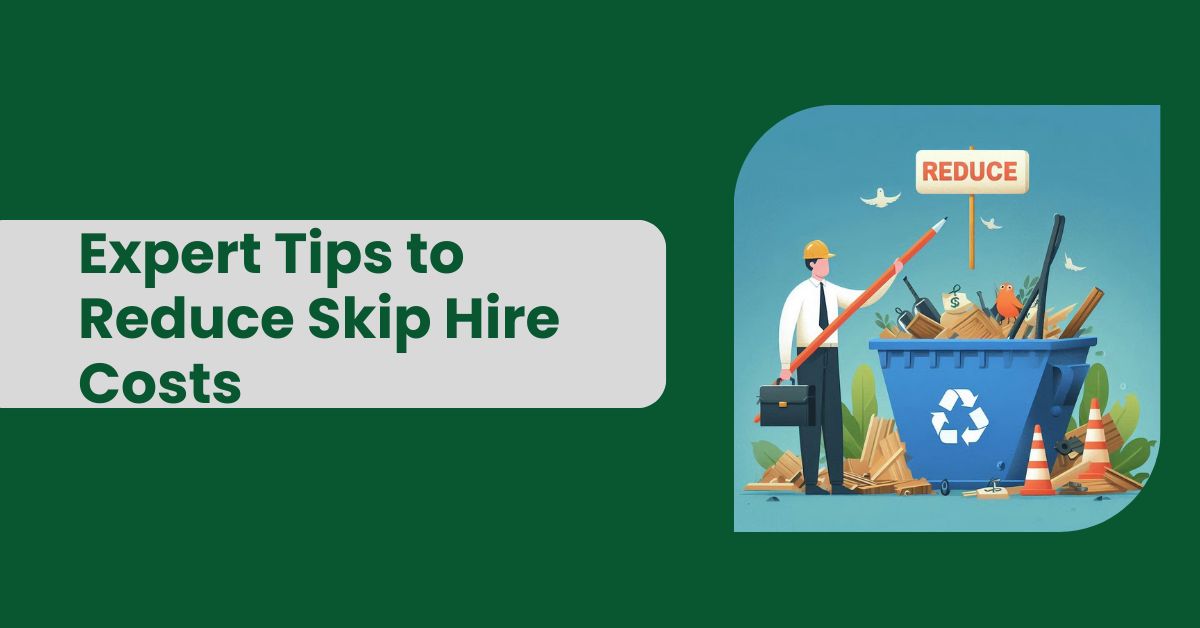
Skip hire services are an efficient way to manage waste that comes from home or garden renovations or construction work. Since they come with a service fee, they should be sought after mindfully, otherwise, there is bound to be an unnecessary expense to the budget. Many people also get caught out by skip hire hidden costs, which can make projects more expensive than expected.”
The relief comes in the form of ways to simplify processes and remove costs while not damaging convenience or quality. In this case, we offer professional guidance that is sure to fit your disposal needs while saving you some money.
How to Reduce Skip Hire Cost: Proven Strategies for Smart Waste Management
1. Determine the Correct Skip Size
Choosing the most suitable skip size can help reduce the skip hire cost, thus, the right size should be chosen. Skips are available in many varieties, but they also come in different sizes ranging from 2 to upward 40 cubic yards.
The major danger here is spending a great deal of money on unused space as well as needing repeat hires for those who tend to underestimate their requirement.
- Mini Skips (2-3 yards): Recommended for small household or garden clean-ups.
- Midi Skips (4-5 yards): Optimal for mid-size renovations or clearing out the yard.
- Builder’s Skips (6-8 yards): Ideal for construction and large household waste projects.
- Roll-on Roll-off Skips (20-40 yards): Great for large-scale commercial or construction work.
Tip: Prior to making reservations, consider factors such as the type and volume of waste as a part of the initial planning phase, as this can significantly reduce skip hire cost. When estimating the volume of waste, one method of quantification is using ‘wheelie bins’ as measurement units (with a standard volume of 0.24 cubic yards). If the particulars are unclear, do not hesitate to consult with the skip hire company. They can explain to you the options best suited for your needs based on your description.
2. Requesting Quotes
Requesting quotes from three or more service providers is one of the basic steps that should be taken prior to defining an agreement with one specific contractor. It greatly helps them compare prices and obtain reasonable evaluations to ascertain that the value being offered will be worth the expense.
The prices for skip hiring are subject to outrageous inconsistencies, which means that Rubbish Clearance Company must be checked with numerous providers to determine the best rates possible. Below are some reputable companies that can be incorporated, but not restricted to:
Fixed prices should account for the delivery and collection of these skips.
Direct marketing permits are granted to the users (when public spaces or lands are being utilised).
Above-usual rental period charges due to the presence of banned items.
Tip: Look for nearby capture centres because they have locally based transport, which is likely to boost the chances of having lower transport fees. Other recommendable alternatives are online places where clients can search through reputable skip providers.
3. Streamlining Costs Associated with Waste Sorting
Optimising waste sorting can be economically advantageous, and it’s one of the easiest ways to save money on skip hire. Placing a skip on site and treating the waste beforehand saves on additional costs. Moreover, numerous skip hire companies have clauses that assert added cost due to prohibited materials plasterboards, tires, or electrical appliances.
- Materials that can and should be recycled include:
- Minimising the amount of waste generated in conjunction with the skip.
- Selling materials like scrap metal can help recover some of the costs incurred.
- Avoid illegal dumping of waste disposal surcharge.
Tip: Speak with your skip hire provider regarding banned items and recycling methods. Setting up different piles for recyclable and non-recyclable materials will simplify processes during the project.
4. Share a Skip with Others
If your project is a smaller scale and doesn’t necessitate a full skip, you can share the cost with a nearby neighbour or business who is also doing a similar decluttering. By sharing a skip, the costs are halved while offering sufficient space for waste. This simple step can help reduce skip hire costs without compromising convenience.
Tip: Establish a fill strategy to better coordinate loading the skip throughout the rental period. Improve communication regarding waste type and timeline to reduce conflicts.
5. Avoid Overfilling the Skip
These services can incur fines for full skips to ensure the safe transit of the container. Skips can be overfilled to excess charge sights, but most vendors will mark “fill line” / waste required should sit level with the skip’s rim. Staying within the limits can help cut the cost of skip hire and avoid penalties. For more practical advice, see our Dos and Don’ts with Skip Hire.
Tip: Gradually add waste during transport to maximise efficiency. Ensure legal limits are met to streamline costs. If nearing capacity, explore options to increase the limit or arrange early pick-up.
6. Manage Your Hire Period Efficiently
Like any other hire service, hiring a skip comes with its own set of expenses. Expenses associated with skip hire are usually time-sensitive; the longer you need the skip for the more you will pay, with average hiring durations ranging from a few days to two weeks. To maximise efficiency, try to rearrange project timelines serially to minimise costs and save money on your skip hire:
- Schedule waste-producing tasks (such as demolition or garden clear out) to date or time done in groups.
- Order the skip so that it arrives right before the waste processing begins.
- Set the collection time as soon as it is filling to avoid unnecessary delays.
Tip: In case of needing additional time, ask about flexible extensions. Some firms employ grants on a daily or weekly basis, which can be cheaper than unused days paid upfront.
7. Location of the Skip
Among other logistics, circumstantial regions always require permission for placing a skip on a road or pavement. The cost of such a permit can amount to anywhere between £20–£100, depending on the private location of usage. However, this problem can easily be mitigated by simply placing the skip on your driveway or garden.
Tip: Make sure that the location proposed is stable and within easy access (no sinking into soft ground). If permission were to be expected, make the application through your local council as early as possible to avoid undue wait time.
8. Discount Negotiations
Some skip hire services are very negotiable, particularly for repeat clients or larger projects. Ask about:
- Discounts for multiple bookings
- Hiring during off-peak times, which may be defined as quieter months like January or February
- Promotions, loyalty schemes or any weak ties a service might have to them
Tip: Build a good rapport with a skip hire provider as regular business can frequently lead to more favourable terms in the future.
9. Explore Alternatives for Select Waste Types
Skip hiring may not always be the most cost-efficient. Consider the following to cut down on skip hire expenses.
Green Waste: Some recycling or composting centres take garden waste for little to no charge.
Bulky Items: Councils have also adopted subsidised or free bulky waste collection for appliances and furniture.
Hazardous Waste: Some wastes, such as asbestos and chemicals more specialised disposers who might offer more cost-effective options that help to reduce skip hire cost.
Tip: Being provided with a council’s local waste disposal options, check the local council’s. Booking a recycling centre’s appointment online may eliminate the necessity for a skip for smaller loads.
10. Best Rates Secured with Early Booking
Leaving skip hire for the last moment can be costly due to limited availability and missing cheaper slots. Planning ahead is a smart way to save money on your skip hire. You can enjoy the following benefits by booking early:
- Securing a preferred skip size and delivery date.
- Taking advantage of the discounts provided.
- Planning the project more suitably.
Tip: Booking at least a week in advance is recommended, especially during spring or summer when skip demand is high.
Conclusion
It is possible to reduce skip hire costs while maintaining quality or convenience. Selecting the proper skip size, waste segregation, strategic planning, and quoting all help to save money while keeping the project on schedule. Make the hire cost-effective, efficient, and stress-free with these expert tips.
Want to get started? Book a skip today, get free quotes, and put these tips into action for your next project!